
Seventh in the “Tools for Data Governance” series.
In the last post, we looked at data stewardship, the human side of data governance that keeps information accurate and well managed. Closely linked to stewardship is the practical discipline of data quality management – the process of ensuring that data is reliable, consistent, and fit for purpose.
Good data quality does not happen by accident. It is the result of structured processes, clear standards, and ongoing monitoring, all supported by the people and tools described in previous posts.
What Is Data Quality Management?
Data quality management (DQM) is the systematic approach to defining, measuring, and improving the quality of data within an organisation. It ensures that data meets agreed standards for accuracy, completeness, consistency, timeliness, and validity.
In other words, DQM is how you make sure your data can be trusted. It involves three main stages:
- Defining quality – establishing what “good” looks like for each dataset.
- Measuring quality – assessing data against those standards using rules, checks, and reports.
- Improving quality – identifying and addressing issues at the source.
In higher education, DQM underpins activities such as statutory reporting, strategic planning, and student success analysis. Reliable data enables better insight and more confident decision-making at every level.
Why It Matters
Poor data quality affects everything from student funding returns to senior management dashboards. Inconsistent or inaccurate data can lead to:
- Incorrect reporting to regulators
- Loss of trust in analytics and dashboards
- Wasted time investigating discrepancies
- Missed opportunities for improvement or intervention
By contrast, well-managed data allows institutions to act with confidence. It also supports compliance with regulations such as GDPR, which requires personal data to be accurate and up to date.
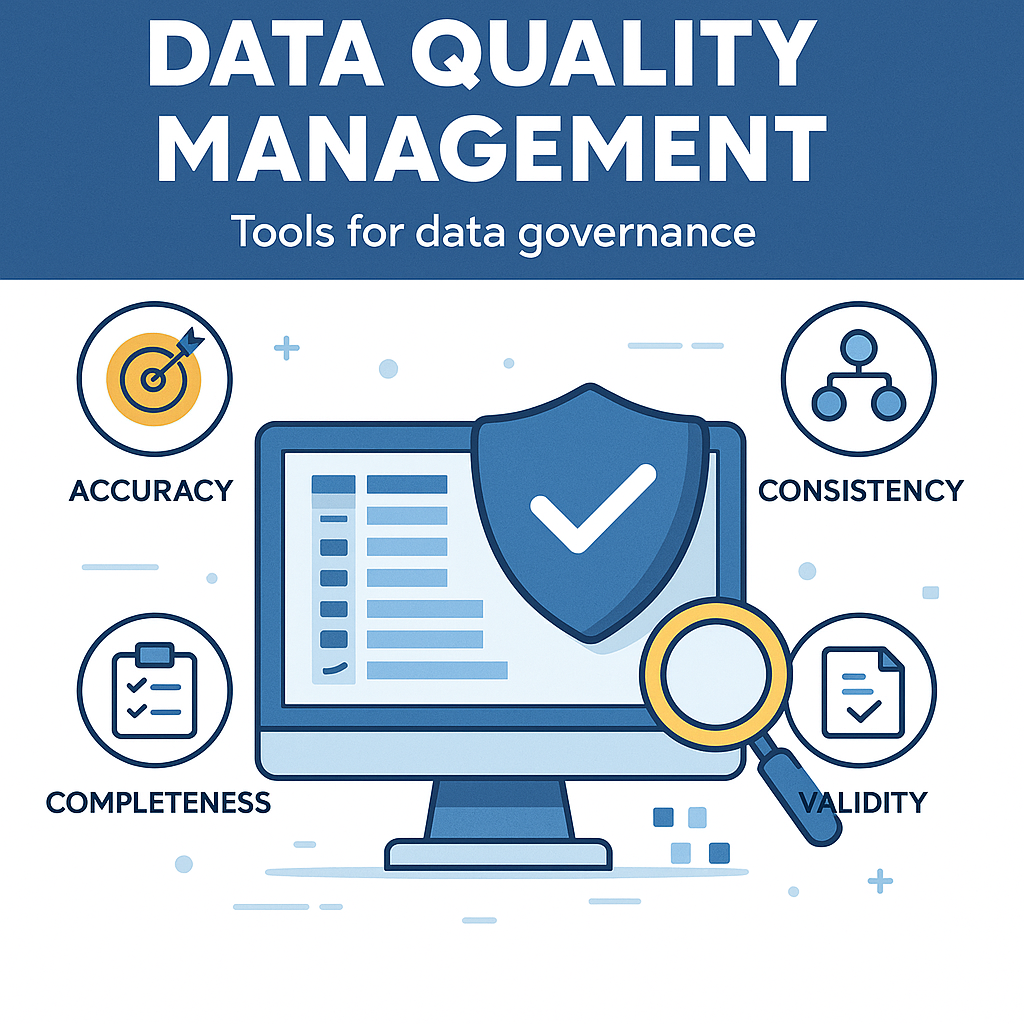
Dimensions of Data Quality
Although different frameworks exist, most institutions assess data quality across several common dimensions:
- Accuracy – does the data correctly reflect reality?
- Completeness – are all required fields populated?
- Consistency – are values aligned across systems and time periods?
- Timeliness – is the data up to date when needed?
- Validity – does the data conform to defined formats, codes, or rules?
- Uniqueness – are duplicate records avoided or managed appropriately?
Defining these dimensions in measurable terms makes quality assessment repeatable and transparent.
The Role of Data Stewards
Data stewards play a central part in data quality management. They define rules, monitor quality reports, and coordinate corrections. Their local knowledge helps interpret quality metrics in context – for example, understanding whether an apparent inconsistency is a genuine error or a legitimate variation.
Stewards also act as advocates for data quality across departments, promoting awareness and ensuring that problems are fixed at the source rather than downstream.
Tools and Techniques
Effective DQM combines automated checks with human review. A few common approaches include:
- Validation rules and constraints
Databases and applications can enforce rules such as “date of birth must be in the past” or “programme code must exist in the reference table.” - Data profiling
Tools analyse datasets to identify patterns, gaps, or anomalies. For example, spotting missing postcodes or invalid email formats. - Data quality dashboards
Visual reports summarise key indicators, such as error rates or completeness levels, helping teams track progress over time. - Feedback and correction processes
Clear channels for reporting and resolving data issues encourage accountability and continuous improvement. - Integration with governance tools
Data catalogs and dictionaries can include data quality scores or status flags, making quality visible to all users.
Building a Data Quality Framework
To make DQM sustainable, it should be embedded in your governance structure rather than treated as a one-off project. A typical framework might include:
- Policy and standards – set out what quality means institutionally and define minimum expectations.
- Ownership and stewardship – ensure that each dataset has an identified owner and steward.
- Quality rules – agree the checks that will be applied to each key dataset.
- Monitoring and reporting – establish regular review cycles and dashboards.
- Continuous improvement – analyse recurring issues and address their root causes, not just the symptoms.
In universities, such a framework can link directly to student records, HR, finance, and research data, ensuring that each area contributes to overall data integrity.
A Practical Example
Consider a university preparing its annual student return.
- The data dictionary defines each field and acceptable values.
- Data stewards review validation reports and correct errors before submission.
- The data catalog records data lineage, showing how figures flow from the student system to the return.
- A data quality dashboard tracks key metrics, such as completion of mandatory fields or invalid postcode rates.
By combining these tools and roles, the university not only submits a cleaner return but also builds longer-term confidence in its data processes.
The Takeaway
Data quality management ensures that data is trustworthy, usable, and aligned with institutional goals. It provides the evidence that governance policies are working in practice and gives decision-makers confidence in the insights they rely on.
For higher education, this means fewer surprises during audits, smoother statutory reporting, and a stronger foundation for planning and analysis.
Coming Up Next
In the next post in the Data Governance Tools series, we will look at data lineage and traceability – how understanding the flow of data through systems strengthens governance, compliance, and trust.